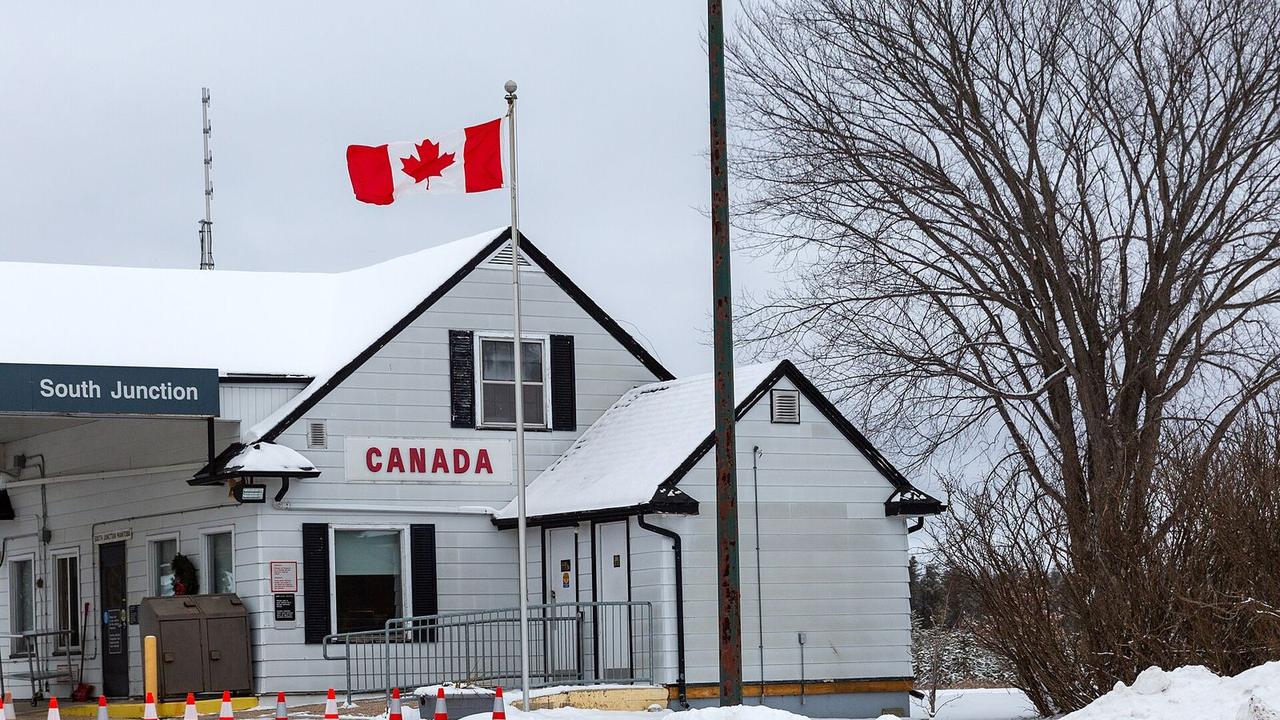
Most casino trips end with a little less money than they started with. Some end the other way: a hand-pay jackpot, a hot run at the craps table or a poker tournament cash. If you are driving or flying home to Canada with that money in your pocket, a federal reporting rule applies that has nothing to do with gambling and everything to do with how much you carry. It is not a tax and it is not a ban. It is a report, and the costly mistakes come from not knowing it exists.
The rule in one sentence
Anyone entering or leaving Canada with currency or monetary instruments worth C$10,000 or more must report them to the Canada Border Services Agency (CBSA). The duty comes from section 12(1) of the Proceeds of Crime (Money Laundering) and Terrorist Financing Act (PCMLTFA), and the details are set out in the Cross-border Currency and Monetary Instruments Reporting Regulations (SOR/2002-412).
Three points matter for a casino winner:
- It is a reporting duty, not a limit. You may carry C$50,000 home if you want to. You simply have to declare it.
- The threshold is C$10,000, not "more than" C$10,000. The regulations set the prescribed amount at $10,000, so exactly C$10,000 is reportable.
- Foreign money counts at its Canadian value. US dollars, euros or anything else are converted using the Bank of Canada exchange rate in effect at the time you cross.
For a Canadian coming home from a US casino this last point catches people out. US$7,500 can be over the line depending on the rate on the day, even though it sounds well under ten thousand.
What counts toward the C$10,000
The total is everything you carry together: Canadian bills, foreign bills and coins, plus what the regulations call monetary instruments. That term covers instruments in bearer form, or in a form where title passes on delivery, including:
- securities such as stocks, bonds, debentures and treasury bills;
- negotiable instruments such as bank drafts, cheques, promissory notes, travellers' cheques and money orders.
The regulations exclude warehouse receipts and bills of lading, and they also exclude instruments that carry a restrictive endorsement or a stamp for clearing. In practice, a casino cheque made out to you is a document the CBSA may ask about. Whether it is reportable depends on its form, so if you are carrying one alongside cash and the combined value is near the threshold, declaring is the safe choice. A report costs nothing; a missed one can.
What about casino chips?
Neither the regulations' definition nor the CBSA's memorandum on the programme mentions casino chips or plaques. Chips are not legal tender and are only redeemable at the property that issued them, so the sensible route is to cash out before you leave the casino. If you are carrying high-value chips across the border for any reason, ask the officer rather than guess.
Which form to use
The CBSA uses three forms for this programme. Which one applies depends on how the money travels.
| Form | Who uses it | Typical casino situation |
|---|---|---|
| E677 | A person carrying currency or instruments on their body or in baggage travelling on the same conveyance | You drive or fly home with your own winnings |
| E667 | Everyone else, including money sent by mail or courier and money carried on behalf of another person | You carry a friend's share of a split jackpot, or you courier a cheque home |
| E668 | The person in charge of a conveyance | A bus or charter driver reporting what is aboard |
Reports must be in writing, signed and dated. The E667 form asks for each instrument, its purpose and its amount converted at the Bank of Canada rate, so keep the casino's payout paperwork with the money.
When and where to report
The regulations require the report without delay, at the customs office at the place of import or, if that office is closed, at the nearest open one. The same rule applies on the way out of Canada at the place of export. That matters if you are heading south to a US casino with a large bankroll in cash: the report applies to leaving as well as entering.
- Tell the border services officer, at the first point of contact, that you are carrying C$10,000 or more.
- Complete and sign the form the officer gives you, listing cash by currency and any instruments.
- Keep the casino receipts, jackpot slips or cheque stub handy in case the officer asks where the money came from.
There is an emergency provision as well. If you cannot report in person because of an emergency, the regulations let you report by telephone first and follow up in writing.
Flying through without stopping
If you are only in transit and the money stays aboard a commercial conveyance, no report is needed. If you get off where customs clearance is required, the duty applies.
Mailing it instead
Sending winnings by mail does not avoid the rule. For imports, a completed report goes inside the item with a customs declaration on the outside. For exports, a report goes inside and a copy goes to customs at or before the time of mailing. Most people find a bank wire simpler, since a transfer between financial institutions is not cash crossing the border.
What happens if you do not report
An officer who has reasonable grounds to believe the rule was broken can seize the money as forfeit. In most first-time cases the officer then offers terms of release, which means paying a penalty to get the money back. The penalty is a percentage of the amount, set by section 18 of the regulations:
| Level | Penalty | When it applies |
|---|---|---|
| 1 | 5%, capped at $2,500 | No concealment, full disclosure once discovered, no previous seizures |
| 2 | 25% | Money was hidden (other than in a false compartment), a false statement was made, or there was a previous seizure that did not involve hiding or a false statement |
| 3 | 50% | A false compartment in a vehicle was used, or a previous seizure involved hiding or a false statement |
On a C$20,000 jackpot, the difference between owning up and stuffing the envelope under the spare tyre is C$1,000 versus C$10,000. Telling the truth when asked is the cheapest option even after you have forgotten to declare.
There is a harsher outcome. If the officer has reasonable grounds to suspect the money is proceeds of crime or terrorist financing, it is seized with no terms of release. That is why proof of the win matters. Casino payout records, a jackpot hand-pay slip or a cheque issued by a regulated casino are exactly the paper that answers the question.
Getting seized money back
A seizure is not the end of the road. The CBSA memorandum on the programme sets out the time limits:
- The Minister may cancel a seizure or reduce the penalty within 90 days of the seizure.
- You may ask for a ministerial decision within 90 days of the seizure.
- If you disagree with that decision, you may appeal to the Federal Court within 90 days of being notified of it.
- A third party who owns the money, for example a friend whose share you carried, has its own route to court within 90 days.
Separately, when no report was made and the officer retains the money rather than seizing it, a full report must follow within 7 days, or 30 days for mail and courier items. If it does not, the money is treated as abandoned to the Crown.
The US side of the trip
Canada is only half of the crossing. US Customs and Border Protection asks travellers entering or leaving the United States to report amounts over US$10,000 on FinCEN Form 105, and recommends filing it electronically. Two details differ from the Canadian rule:
- the US test is "over" US$10,000, not "10,000 or more";
- the amount is counted for a family or group travelling together, not per person, so splitting the cash between spouses does not get under the line.
CBP warns that failing to report can lead to seizure and forfeiture, and in some cases civil or criminal penalties. A Canadian driving to a US casino with a large bankroll can therefore owe a report on both sides of the border on the same day.
A practical checklist for a big win
- Ask for a cheque or a wire. Large land-based payouts are often available by cheque, and a bank transfer moves the money without cash at the border. Our guide to Canadian land-based casinos covers how the major properties pay out.
- Keep the paperwork. Payout slips and the cheque stub show where the money came from.
- Convert before you count. Check the Bank of Canada rate if you are carrying US dollars near the line.
- Declare at the first point of contact. Do not wait to be asked twice.
- Never split or hide money to dodge the threshold. Concealment moves you straight to the 25% or 50% penalty tier.
For the wider picture of how gambling is regulated across the provinces, see our overview of gambling regulations in Canada. If someone offers to "carry" or "clean" your winnings for a fee, treat it as a red flag, and read our notes on common casino scams.
Keeping it a good night
A big win is the moment many players raise their stakes on the next trip. Set the money aside before you plan the next visit, and if gambling has stopped feeling like entertainment, our responsible gaming page lists provincial tools and help lines. Casinos in Canada are 19+ in most provinces and 18+ in Alberta, Manitoba and Quebec. In Ontario, ConnexOntario offers free, confidential support at 1-866-531-2600.
For questions about the border rule itself, the CBSA Border Information Service answers at 1-800-461-9999 from within Canada, or (204) 983-3500 from outside Canada.
Questions readers ask
Do I pay tax on casino winnings when I declare them at the border?
The border report is not a tax. It records that you are carrying C$10,000 or more in currency or monetary instruments. Declaring the money does not by itself create a duty or a charge.
Is exactly C$10,000 reportable?
Yes. The regulations set the prescribed amount at $10,000, and the duty applies to currency and monetary instruments of that value or more, converted at the Bank of Canada rate in effect at the time.
Can my partner and I each carry half to stay under the limit?
On the Canadian side each traveller files their own report, but hiding or structuring money to avoid a report raises the penalty tier if discovered. On the US side, CBP counts the total for a family or group travelling together.
What if I forgot to declare and the officer finds the money?
The money can be seized. If you did not hide it, disclosed it fully once discovered and have no prior seizures, terms of release usually carry a 5% penalty capped at $2,500. You can ask for a ministerial decision within 90 days.
Does a casino cheque count toward the C$10,000?
Cheques are listed among negotiable instruments, but the definition covers only instruments in bearer form or where title passes on delivery, and it excludes instruments with a restrictive endorsement. If a cheque plus cash is near the threshold, declaring is the safe choice.
Sources
- CBSA Memorandum D19-14-1, Cross-border Currency and Monetary Instruments Reporting
- Cross-border Currency and Monetary Instruments Reporting Regulations (SOR/2002-412)
- CBSA form E667, Cross-border Currency or Monetary Instruments Report – General
- U.S. Customs and Border Protection, Money and Other Monetary Instruments
Related on CasinoTrust
- Wire Transfer Casinos
- Top 10 Canadian Land Casinos
- Gambling Regulations in Canada
- Casino Scams - Blacklisted Casinos 2026
- Responsible Gambling in Canada
More from the blog
 Quebec law"Void in Quebec": why Canadian contests shut out Quebec, and what changedFor years the fine print of Canadian sweepstakes carried the same three words.
 Charity lotteries50/50 draws in Canada: the law, how the pot is split, and online 50/50sHalf the ticket money goes to the winner, half to the cause.
 Charity lotteriesChase the Ace in Canada: how the draw works and why it needs a licenceA weekly ticket draw, a shrinking deck of cards and a jackpot that grows until someone turns over the ace of spades.
 RegulationBinary options in Canada: how Multilateral Instrument 91-102 bans themA yes-or-no wager on a price, settled in minutes: binary options look like gambling and are marketed like investing.