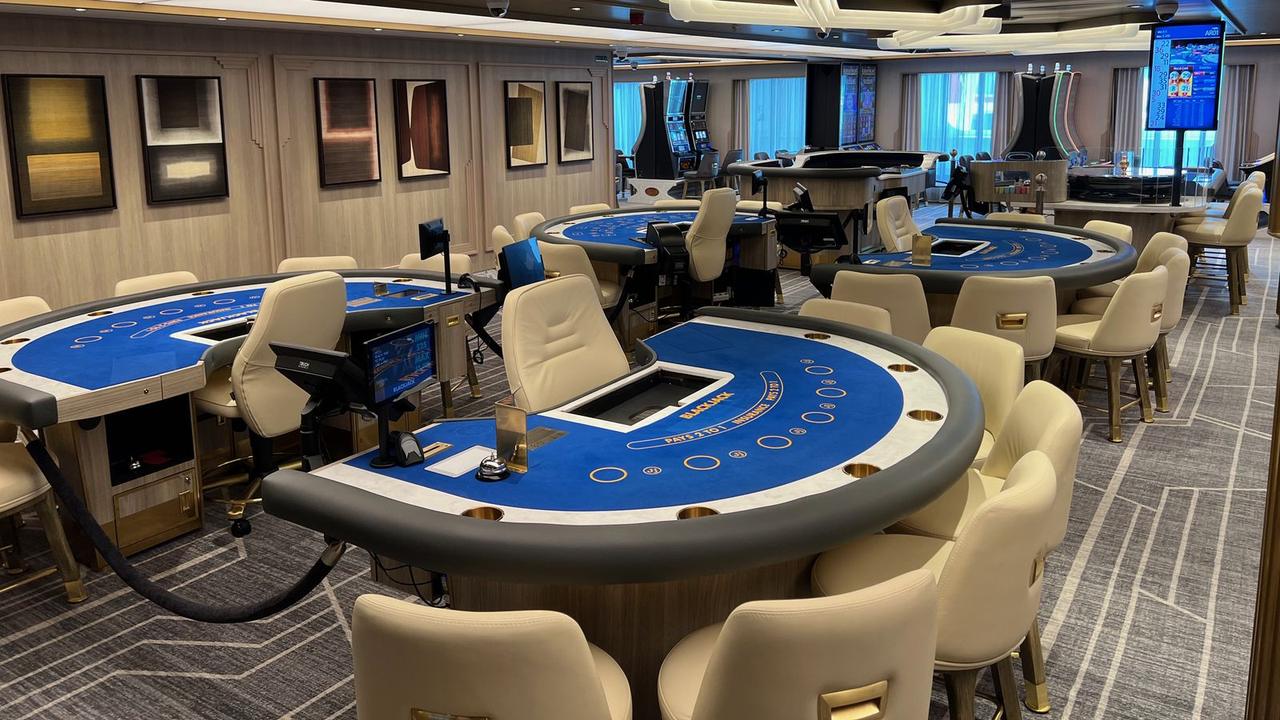
When a cruise ship's casino may open near Canada is not left to the cruise line. It is governed by a specific provision of the Criminal Code, section 207.1, which carves out an exception to Canada's general ban on gaming for a narrow category of vessel and voyage.
This article walks through what that section actually says, clause by clause, and what it does not say. It is a reading of the statute, not legal advice, and it does not describe any particular cruise line's practice.
Why ships needed their own rule
Part VII of the Criminal Code treats lotteries and games of chance as offences unless an exception applies. Section 206 lists the prohibited conduct, from running a scheme for disposing of property by chance to inducing anyone to stake money on a dice game or wheel of fortune. Section 207 then sets out who may lawfully conduct a "lottery scheme", and the central answer is a provincial government, or a licensee of one, acting under provincial law.
A ship casino does not fit that model. It is not run by a province, it is not licensed by one, and for much of a voyage it may be outside any province entirely. Without a specific exemption, a cruise ship calling at Canadian ports would face the same rules as an unlicensed gaming house on land. Section 207.1, enacted by S.C. 1999, c. 5, s. 7, supplies that exemption, but only on conditions.
What section 207.1 allows
Subsection 207.1(1) begins with the words "Despite any of the provisions of this Part relating to gaming and betting". It then permits the owner or operator of an international cruise ship, or their agent, to conduct, manage or operate a lottery scheme during a voyage, and it permits any person to participate in that scheme. Both halves matter: the operator is protected when it runs the games, and passengers are protected when they play.
The permission holds only if every one of the conditions in paragraphs (a) to (d) is met. Miss one and the general offences in Part VII apply again.
The four conditions, one by one
(a) Everyone playing is on board
All the people participating in the lottery scheme must be located on the ship. The exemption covers a casino for passengers; it is not a licence to take bets from shore.
(b) No link to anything off the ship
The scheme must not be linked, by any means of communication, with any lottery scheme, betting, pool selling or pool system that is conducted or operated off the ship. A shipboard slot bank cannot be networked to a land-based progressive jackpot, and the ship cannot become a terminal for off-ship betting.
(c) Not within five nautical miles of a Canadian port of call
The scheme must not be operated within five nautical miles of a Canadian port at which the ship calls or is scheduled to call. This is the clause passengers notice. The distance is measured from the port, and it applies to ports the ship actually calls at or is scheduled to call at.
(d) The voyage itself must qualify
The final condition looks at the ship's registry and itinerary, and it has two branches, set out below.
Two kinds of qualifying voyage
Paragraph 207.1(1)(d) offers two routes. The first is simple: the ship is registered in Canada and its entire voyage is scheduled to be outside Canada. The second covers the far more common case of a ship, registered anywhere including Canada, whose voyage includes some scheduled voyaging within Canada. That second route has two further requirements.
| Route | Registry | Itinerary requirement |
|---|---|---|
| 207.1(1)(d)(i) | Canada | Entire voyage scheduled outside Canada |
| 207.1(1)(d)(ii) | Any country, including Canada | Voyage of at least 48 hours, with some voyaging in international waters and at least one non-Canadian port of call (which may be the port where the voyage begins or ends) |
| 207.1(1)(d)(ii)(B) | Any country, including Canada | No disembarking at a Canadian port of passengers who boarded at another Canadian port, unless the ship calls at least one non-Canadian port in between |
The 48-hour and non-Canadian-port requirements are cumulative with the passenger-movement rule in clause (B). Read together, they keep the exemption to genuinely international cruising and away from domestic point-to-point travel.
What counts as an "international cruise ship"
Subsection 207.1(4) defines the term. An international cruise ship is a passenger ship suitable for continuous ocean voyages of at least forty-eight hours. The definition expressly excludes a ship used or fitted primarily to transport cargo or vehicles.
That exclusion is worth noticing. A car ferry with a lounge, however long its route, is not the vessel this section has in mind. The definition looks at what the ship is built and used for, not only at how long the trip lasts.
Which games the exemption covers
Section 207.1 has its own definition of "lottery scheme", narrower in some ways and broader in others than the one in section 207. For this section, a lottery scheme means a game or any proposal, scheme, plan, means, device, contrivance or operation described in any of paragraphs 206(1)(a) to (g). Only two things are carved out of it:
- three-card monte, punch board or coin table;
- bookmaking, pool selling or the making or recording of bets, including bets made through pari-mutuel systems, on any race or fight, or on a single sport event or athletic contest.
There is no exclusion for games played on a computer, video device or slot machine, and none for dice games.
That last point marks a real difference from land-based rules. Under paragraph 207(4)(c), when a charity, a fair board or another licensee runs a lottery scheme, games on a computer, video device or slot machine, and dice games, fall outside what it may offer. Only a provincial government may run those. On a qualifying cruise, the section 207.1 definition contains no such limit, which is why slots and craps appear in shipboard casinos. For how those games work, see our guides to craps and to slots.
The sports carve-out runs the other way. Since S.C. 2021, c. 20, s. 2, the section 207 definition excludes only bets on horse-races, which let provinces offer single-event sports wagering. The section 207.1 definition still excludes bets on any race or fight, or on a single sport event or athletic contest. On the wording of the statute, a sportsbook is not part of what the cruise exemption permits.
Rules that still apply on board
Subsection 207.1(2) imports two provisions from section 207. Paragraph 207(1)(h) allows anyone to make or print in Canada anything relating to gaming and betting that is to be used in a place where its use is lawful, and to send, ship or carry such things to that place, which is what lets a ship take on its gaming equipment. Subsection 207(5) says that nothing in the exemption authorizes pari-mutuel betting on horse-races except in accordance with section 204.
Responsible-gambling expectations do not vanish at sea either. On land, gaming in Canada is restricted to adults: 19 and over in most provinces, and 18 and over in Alberta, Manitoba and Quebec. A cruise line sets its own age policy on board, and passengers should read it before sailing. Our responsible gaming page lists tools and helplines by province.
What happens outside the conditions
Subsection 207.1(3) creates two offences. Everyone who conducts, manages or operates a lottery scheme other than as permitted by the section is guilty of an indictable offence liable to imprisonment for a term of not more than two years, or of an offence punishable on summary conviction. Everyone who participates in such a scheme is guilty of an offence punishable on summary conviction.
In other words, the five-nautical-mile rule and the itinerary rules are not soft guidance. If the conditions are not met, the general prohibition in Part VII applies to the operator and, at least in law, to the person at the table.
A practical reading for passengers
For someone booking a cruise from a Canadian port, the section suggests a few questions worth asking the cruise line before departure, without assuming any answer:
- Does the itinerary include at least one non-Canadian port and some time in international waters, and does it last 48 hours or more?
- When will the casino open after leaving each Canadian port, given the five-nautical-mile limit?
- Are any shipboard games linked to systems off the ship? Under paragraph (b), they should not be.
- Is sports betting offered? The section 207.1 definition excludes it.
Section 207.1 is a federal rule about the ship's casino. It does not change provincial rules about gambling onshore, and it says nothing about online casinos used from a cabin over satellite internet. Those fall under the general framework described in our overview of gambling regulation in Canada, and the provincial licensing model is explained on our gambling licences page. If you prefer a casino with a fixed address, our guide to Canadian land casinos covers provincially run venues.
Questions readers ask
Why do cruise ship casinos close near Canadian ports?
Paragraph 207.1(1)(c) of the Criminal Code says the shipboard lottery scheme must not be operated within five nautical miles of a Canadian port at which the ship calls or is scheduled to call.
Does the exemption apply to any ship?
No. It applies to an international cruise ship, defined in s.207.1(4) as a passenger ship suitable for continuous ocean voyages of at least 48 hours, excluding ships used or fitted primarily to carry cargo or vehicles.
Can a cruise between two Canadian ports have an open casino?
Only if the voyage meets s.207.1(1)(d). A foreign or Canadian ship on a voyage within Canada must sail at least 48 hours, include international waters and a non-Canadian port of call, and not land passengers at a Canadian port who boarded at another Canadian port without a non-Canadian call in between.
Are slot machines and dice games allowed on board?
The s.207.1 definition of lottery scheme does not exclude computer, video, slot machine or dice games. It does exclude three-card monte, punch boards, coin tables and bookmaking on races, fights or single sporting events.
Is it an offence to play in a shipboard casino that breaks the rules?
Under s.207.1(3)(b), a person who participates in a lottery scheme not permitted by the section commits an offence punishable on summary conviction.
Sources
- Criminal Code, s.207.1, Exemption: lottery scheme on an international cruise ship (Justice Laws Website)
- Criminal Code, s.207, Permitted lotteries (Justice Laws Website)
- Criminal Code, s.206, Offence in relation to lotteries and games of chance (Justice Laws Website)
- Criminal Code, s.197, Definitions for Part VII (Justice Laws Website)
Related on CasinoTrust
- Gambling Regulations in Canada
- Gambling Licenses Canada
- How to Play Craps Online and Win Money
- Best Online Slots Canada
- Responsible Gambling in Canada
- Top 10 Canadian Land Casinos
More from the blog
 Lottery mathsEncore, Extra and Tag: one lottery add-on, five regional versionsThe $1 question at the lottery counter is answered differently depending on the province.
 Border rulesBringing Casino Winnings Across the Border: How the C$10,000 Report WorksA good night in Las Vegas, Niagara or Atlantic City can leave you carrying more cash than the border allows without a report.
 LawSingle-event sports betting in Canada after Bill C-218: what changed and what did notOne paragraph of the Criminal Code kept Canadian bettors on parlay cards for decades.
 TaxAre lottery and casino winnings taxable in Canada?A recreational win is generally not income in Canada, but the money it earns afterwards is.