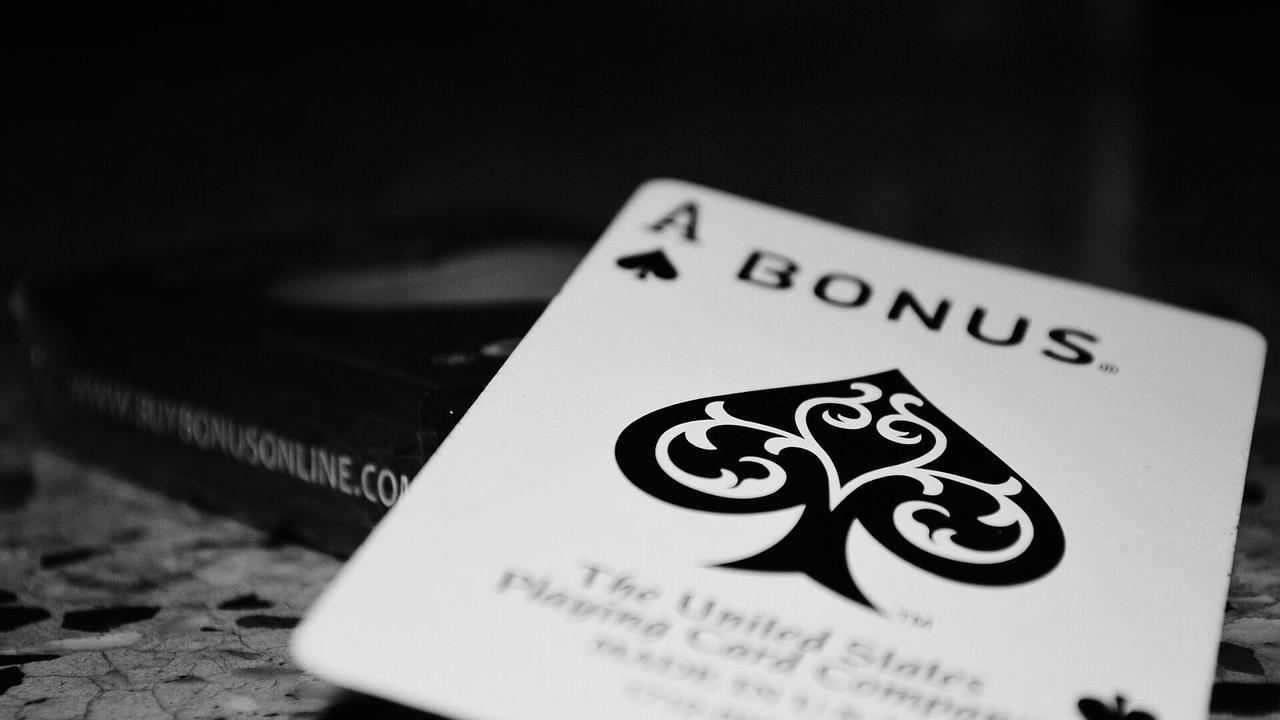
Chase the Ace is a charity raffle that runs as a series of draws, usually weekly. Each draw has its own ticket sales and its own winning ticket. The person holding that ticket wins a share of the week's sales and gets to pick one card from a deck. If the card is the ace of spades, they also take the accumulated jackpot and the game ends. If it is any other card, that card is removed, the jackpot carries over and the next draw has one card fewer. In Canada the game is a lottery scheme, so it is lawful only when a charitable or religious organization runs it under a provincial licence.
What follows is a reading of the federal provision and of published provincial rules, chiefly from Nova Scotia and Ontario, where the game has a written framework. It is not legal advice for organizers, and the details of any particular draw are set by its own licence and house rules.
How a single draw works
Ontario's regulator, the Alcohol and Gaming Commission of Ontario (AGCO), calls the game "Catch the Ace" and describes it in Information Bulletin No. 78 as a multiple-draw raffle lottery for eligible charitable organizations. The sequence it sets out is the one most players will recognize:
- Tickets are sold for one specific draw. A ticket is valid only for the draw it was bought for.
- At the draw, one winning ticket is selected.
- The winner of that draw picks one card from a standard 52-card deck.
- If the card is the ace of spades, the winner also receives the progressive jackpot.
- If it is not, the card is removed and that draw's share for the jackpot rolls over to the next draw.
- Non-winning tickets are removed and a new series of tickets is sold for the following draw.
Two features follow from this design. First, buying a ticket one week gives no stake in later weeks; each draw starts from zero tickets. Second, the odds for the card pick change over time. With 52 cards in the deck, the first winner has a 1 in 52 chance of finding the ace. With five cards left, the chance is 1 in 5. That shrinking deck is what drives crowds to the final weeks of a long-running game.
The envelopes
To stop anyone knowing which card is which, the AGCO bulletin requires each card to be sealed in an identical, opaque envelope. The envelopes are shuffled, numbered 1 to 52 and displayed publicly and securely at each draw. The winner chooses an envelope by number. Cards that are not the ace of spades are destroyed immediately, with a log signed by two members of the organization.
How the money is split
Each week's ticket sales are divided three ways: a prize for that week's winning ticket, a contribution to the jackpot, and a share kept by the licensed charity. Ontario fixes the proportions in Bulletin No. 78:
- 20% of ticket sales to the winning ticket holder for that draw;
- 30% to the progressive jackpot;
- 50% retained by the licensee to pay allowable expenses, with the rest going to the charitable purpose.
Other provinces may use different percentages, and the house rules of each game state the split that applies. The table below runs Ontario's proportions on round numbers chosen only to show the arithmetic.
| Illustrative example | Week 1 | Week 2 | Week 3 |
|---|---|---|---|
| Ticket sales for the draw | $10,000 | $20,000 | $40,000 |
| Weekly winner (20%) | $2,000 | $4,000 | $8,000 |
| Added to jackpot (30%) | $3,000 | $6,000 | $12,000 |
| Retained by licensee (50%) | $5,000 | $10,000 | $20,000 |
| Jackpot after the draw if the ace is not found | $3,000 | $9,000 | $21,000 |
The example assumes the ace is not drawn in any of the three weeks. If the week 3 winner had found it, they would have taken $8,000 plus the $21,000 jackpot. Because the jackpot is fed only by a fixed slice of each week's sales, it grows fastest when sales climb, which is exactly what happens as the deck gets thin.
Why it needs a licence: section 207(1)(b)
Chase the Ace is a game of chance with a prize, paid for by buying a ticket. That places it inside the lottery offences in section 206 of the Criminal Code. Section 207 then sets out who may lawfully conduct a lottery scheme. Paragraph 207(1)(b) permits a charitable or religious organization to conduct and manage a lottery scheme in a province "pursuant to a licence issued by the Lieutenant Governor in Council of a province" or a person or authority the province designates, provided the proceeds "are used for a charitable or religious object or purpose".
Three consequences flow from that wording:
- Only eligible organizations. A private person, a bar or a business cannot run its own Chase the Ace. The licence goes to a charitable or religious organization.
- The province decides. Licensing is provincial, so the rules differ from one province to the next, and a licence in one province does not cover ticket sales in another.
- The money has a purpose. Proceeds must go to a charitable or religious object. The house rules usually name the beneficiary.
For the wider picture of who may run which kind of gambling, see the overview of gambling regulation in Canada. Our page on Canadian lotteries covers the provincial games that operate under the separate permission in paragraph 207(1)(a).
Who issues the licence
Nova Scotia
Nova Scotia published a dedicated Policy: Chase the Ace Style Lotteries (Licensing Conditions), approved and effective on May 16, 2016. It states that the Alcohol, Gaming, Fuel and Tobacco Division (AGFT) of Service Nova Scotia issues Chase the Ace licences to charitable and religious organizations under the Nova Scotia Ticket Lottery Regulations. The policy cites section 9 of those regulations, which allows terms and conditions to be prescribed on a ticket lottery licence or permit, and it requires licensees to hold a valid ticket lottery licence before the game starts and for its whole duration.
Ontario
In Ontario the licensing authority depends on the size of the prize board. Under Bulletin No. 78, a municipality licenses Catch the Ace events with prize boards up to $50,000 and may charge up to 3% of prizes as a licence fee. Above $50,000, the licence comes from the Registrar of Alcohol, Gaming and Racing at the AGCO; the applicant must notify the municipality in writing, send a copy to the AGCO and submit a safety and security plan.
Common licence conditions
The Nova Scotia policy lists the conditions imposed on every Chase the Ace licence in that province. Several of them are worth knowing as a player, because they describe what a properly run draw looks like:
- A Chase the Ace style lottery is limited to 52 draws maximum, using no more than 52 cards. If a joker is used, another card must be removed and destroyed before the game starts.
- The licensee must keep a record of the serial numbers of all tickets in play each week, so that no duplicate ticket rolls are used.
- Weekly financials and complete draw details must be recorded and available.
- The licensee must notify AGFT as soon as reasonably possible if the jackpot exceeds $50,000. From that point, tickets must be unique from draw to draw and a Lottery Operational Plan covering communications, an exit plan, cash management, traffic and security must be submitted.
- The ticket draw and the card selection must be video-recorded.
- Immediately before the draw, the organizers announce the day's ticket sales, the ticket winner's prize, the amount being added to the jackpot and the revised jackpot.
- Those handling cards show empty hands and roll up their sleeves; winning numbers are announced at least three times by audio and visual means.
- The person drawing the ticket or setting up the cards must not hold a ticket for that draw, and the licensee and key personnel cannot be ticket holders.
- House rules must be displayed at all times, and the licence expires once the jackpot is awarded.
Ontario's bulletin adds its own requirements: tickets bought with cash only, a report on Form 6044 within 7 calendar days after every fourth draw, video kept for at least 30 days, prizes paid by cheque in Canadian funds, and the Ontario Problem Gambling Helpline number printed on the rules of play, print advertising and stub tickets. Winners do not have to attend the draw, but for roll tickets the rules of play must say how long a winner has to claim before another ticket is drawn.
Large jackpots in Atlantic Canada
Chase the Ace became a phenomenon in Cape Breton, and CBC News reported on the biggest runs as they happened. In Inverness, N.S., CBC reported that Donelda MacAskill of Englishtown won a final jackpot of $1,771,256.76 after the ace of spades came up. In Sydney, N.S., CBC reported that Kathy McPherson won a jackpot of $2.9 million, drawing the ace from the last five cards. The same report described tickets selling for $5 each.
Those runs are part of why both provinces published detailed conditions: a jackpot that reaches seven figures brings crowds, traffic and large amounts of cash into a small venue. Nova Scotia's $50,000 notification threshold and Ontario's safety and security plan for larger boards respond to that risk.
Before you buy a ticket
- Look for the licence. A legitimate draw is run by a named charitable or religious organization and can show its licence and house rules.
- Read the house rules for the split, the draw time, whether you must be present and how long you have to claim.
- Be sceptical of online offers to "buy into" a Chase the Ace from another province. A provincial licence covers that province, and Ontario's version requires cash ticket sales. The casino scams page lists other warning signs.
- Set a weekly limit. A growing jackpot and a thinning deck are designed to make each next week feel more urgent; the psychology of gambling page explains why that pull works.
Real-money gambling in Canada is for adults: 19 and over in most provinces, 18 and over in Alberta, Manitoba and Quebec. If a weekly draw has stopped being a night out and started to feel like a chase, our responsible gaming page lists support by province.
Questions readers ask
How does Chase the Ace work?
Tickets are sold for each draw and one winning ticket is picked. That winner takes a share of the week's sales and picks a card; the ace of spades also wins the jackpot, any other card is removed and the jackpot carries over.
Who gets the money from a Chase the Ace draw?
Ticket sales are split between the weekly winner, the jackpot and the licensed charity. In Ontario, AGCO Bulletin No. 78 sets the split at 20% to the winner, 30% to the jackpot and 50% to the licensee.
Why does Chase the Ace need a licence?
It is a lottery scheme under the Criminal Code. Paragraph 207(1)(b) allows a charitable or religious organization to run one only under a provincial licence, with proceeds used for a charitable or religious purpose.
Who licenses Chase the Ace in Nova Scotia?
Service Nova Scotia's Alcohol, Gaming, Fuel and Tobacco Division issues the licences under the Nova Scotia Ticket Lottery Regulations, and its policy limits a game to 52 draws.
Who licenses Catch the Ace in Ontario?
A municipality for prize boards up to $50,000, and the Registrar at the AGCO for prize boards over $50,000.
What is the largest Chase the Ace jackpot reported in Nova Scotia?
CBC News reported a $2.9 million jackpot won in Sydney, N.S., and a $1,771,256.76 jackpot won in Inverness, N.S.
Sources
- Criminal Code, s.207, Permitted lotteries (Justice Laws Website)
- Service Nova Scotia, Policy: Chase the Ace Style Lotteries (Licensing Conditions)
- AGCO, Info Bulletin No. 78: Catch the Ace Progressive Raffle Pilot
- AGCO, Catch the Ace terms and conditions
- CBC News, Woman wins $2.9M at Sydney's Chase the Ace
- CBC News, Inverness Chase the Ace final draw
Related on CasinoTrust
- Gambling Regulations in Canada
- Canadian Lotteries
- Casino Scams - Blacklisted Casinos 2026
- Psychology of Gambling
- Responsible Gambling in Canada
More from the blog
 LawDice games and the Criminal Code: why only provinces may run themCanada's gaming law names dice games outright, and treats them more strictly than most table games.
 Quebec law"Void in Quebec": why Canadian contests shut out Quebec, and what changedFor years the fine print of Canadian sweepstakes carried the same three words.
 Charity lotteries50/50 draws in Canada: the law, how the pot is split, and online 50/50sHalf the ticket money goes to the winner, half to the cause.
 LawWhy Canadian prize draws ask a skill-testing questionWin a draw in Canada and you are usually asked to solve a short arithmetic problem before the prize is released.