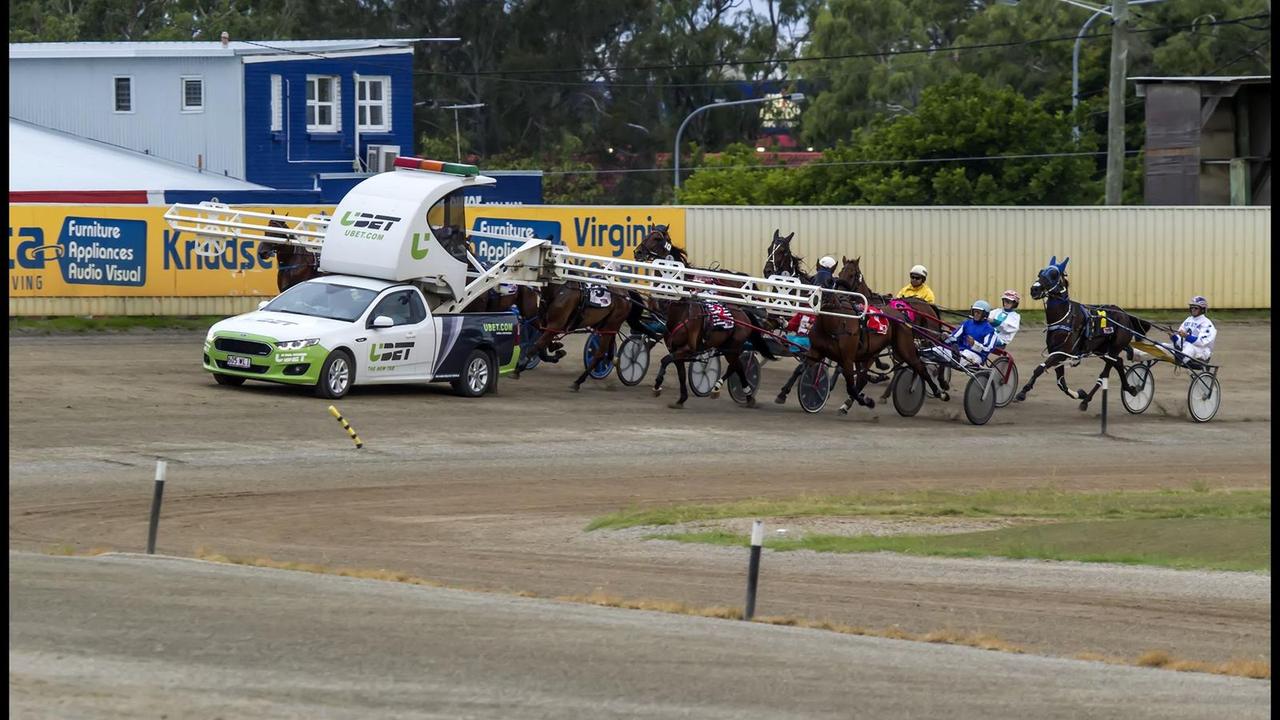
Horse racing bets are federal because they are lawful under a different provision from every other kind of gambling. Casinos, lotteries and sportsbooks rely on section 207 of the Criminal Code, which lets provinces run lottery schemes. Horse-race betting relies on section 204, which exempts pari-mutuel bets from the betting offences only when they are made through an approved pari-mutuel system, on the race-course of an association, under supervision by an officer appointed by the federal Minister of Agriculture and Agri-Food. That officer's work is carried out by the Canadian Pari-Mutuel Agency.
This article walks through the statute, the regulations and the agency, and then shows how a pari-mutuel pool works. It is general information drawn from the official texts, not legal advice.
The section 204 exemption
Sections 201 and 202 of the Criminal Code make betting houses, bookmaking and pool-selling offences. Subsection 204(1) lists three situations to which those two sections do not apply:
- (a) holding stakes for the winner of a lawful race, sport, game or exercise;
- (b) private bets between individuals who are not engaged in the business of betting;
- (c) bets made "through the agency of a pari-mutuel system on running, trotting or pacing horse-races", on the race-course of an association, provided "the provisions of this section and the regulations are complied with."
Paragraph (c) is the whole legal foundation of commercial race betting in Canada, and its conditions are strict. Subsection 204(11) defines an "association" as an incorporated body that "owns or leases a race-course and conducts horse-races in the ordinary course of its business". Subsection 204(3) requires the pari-mutuel system to be supervised by an officer appointed by the Minister. Under subsection 204(7), that officer may stop betting if not "satisfied that the provisions of this section and the regulations are being carried out in good faith." Breaking the rules is an offence under subsection 204(10), punishable on indictment by up to two years' imprisonment or on summary conviction.
The section also stretches the idea of a race-course in two controlled ways. Subsection 204(9.1) lets the Minister designate an adjacent zone as part of a race-course if its farthest point is "not more than 900 metres" from the track and the operator owns or leases it. Subsection 204(8.1) lets the Minister certify the governing body of a race held outside Canada, so that pari-mutuel betting can be offered in Canada on that race.
The Canadian Pari-Mutuel Agency
The federal government describes the Canadian Pari-Mutuel Agency (CPMA) as "a special operating agency within Agriculture and Agri-Food Canada", with a mandate "to ensure that pari-mutuel betting is conducted in a way that is fair to the public." In practice the agency:
- issues permits, licences and authorizations to racetrack and betting theatre operators;
- audits and monitors betting activity and enforces the regulations;
- runs the Equine Drug Control Program, testing horses to discourage the use of prohibited substances.
The placement in an agriculture department looks odd until you read the statute. Section 204 gives the regulation-making power to the Minister of Agriculture and Agri-Food, and much of what it allows the Minister to regulate concerns the animals: subsection 204(9) covers the conduct of race meetings, including photo-finishes and drug testing, and restrictions on drugs at or near race-courses.
The Pari-Mutuel Betting Supervision Regulations
The detailed rules are in the Pari-Mutuel Betting Supervision Regulations, SOR/91-365. Their structure shows how much of the betting process is governed federally:
- requirements for pari-mutuel systems and their testing (sections 12, 15 and 20);
- telephone account betting (section 76), on-track account betting (section 84.1) and theatre betting (section 85);
- the association's percentage (section 102) and the calculation of legal percentages, pools and pay-out prices (section 114);
- separate pay-out rules for win, place and show pools (sections 120, 123 and 127), daily doubles (section 133), and exacta, quinella and triactor pools (section 138);
- equine drug control in Part V (sections 148 to 171), with a schedule listing prohibited drugs.
The CPMA lists the same four betting channels: on-track, on-track account, theatre and telephone account betting. Each is a route into the pari-mutuel pools, not a separate form of gambling.
How a pari-mutuel pool and takeout work
The CPMA's own definition is short: "Pari-mutuel betting is an exchange of monies between the bettors, less a percentage of the bet." Bettors are not betting against the track. All the money bet on one type of wager in one race goes into a pool, deductions are taken off the top, and what remains is divided among the winning tickets.
Two deductions come from the Criminal Code itself. Subsection 204(6) lets the association retain a percentage of each pool "not exceeding the percentage prescribed by the regulations", plus any odd cents left over from rounding. Subsection 204(4) requires a further payment to the Receiver General, the federal levy described below. Together these are what bettors call the takeout. Because the pool is divided only once betting closes, the final price on a horse is not known when a ticket is bought; that is the core difference from a fixed-odds bet.
The table below uses round numbers chosen only to show the arithmetic. The 20% deduction is an illustrative figure, not a rate set by Canadian law or used by any particular track.
| Illustrative win pool | Amount |
|---|---|
| Total bet to win on all horses in the race | $10,000 |
| Deductions at an assumed 20% (association's percentage plus levy) | $2,000 |
| Net pool returned to winning bettors | $8,000 |
| Amount bet to win on the horse that wins | $2,000 |
| Return for each $1 bet on the winner ($8,000 / $2,000) | $4.00, so $8.00 on a $2 ticket |
Change one input and the price moves. Had $4,000 of the pool been on the winner, each dollar would return $2.00. Had the winner been a long shot with $500 on it, each dollar would return $16.00. The deduction stays the same either way, which is why it matters more over many bets than in any single race. The regulations set the exact method, including how pay-out prices are calculated in each pool type; our page on the psychology of gambling looks at why a steady margin is easy to overlook.
The federal levy on every bet
Subsection 204(4) requires the operator of a pari-mutuel system to pay the Receiver General "one-half of one per cent, or such greater fraction not exceeding one per cent," as fixed by the Governor in Council, of the total amount bet in each pool. The fraction actually fixed is in the Pari-Mutuel Payments Order, SI/83-72, which says: "the fraction fixed is eight-tenths of one per cent." The order took effect on 1 April 1983 and cites the provision as subsection 188(4), its number at the time.
That 0.8% is how the CPMA is funded. The agency's own page says it collects "a levy of 0.8% on each bet placed in Canada on horse races", and reports that Canadian bets in 2018 exceeded $1.21 billion, with $9.7 million collected through the levy that year. The statute allows the Governor in Council to raise the fraction up to the 1% ceiling in subsection 204(4); any change would appear as an amendment to the order.
Where the provinces come in
Federal jurisdiction covers the betting, not the sport. Racing itself (licensing the people and tracks, setting rules of racing, judging races and disciplining participants) is provincial. In Ontario, that role belongs to the Alcohol and Gaming Commission of Ontario. Its account of the history explains that in 2015 the province introduced the Horse Racing Licence Act, which moved "the regulatory responsibilities for horse racing from the ORC", the former Ontario Racing Commission, to the AGCO and integrated racing into the province's gaming strategy.
The result is a two-layer system at every Canadian track. A provincial regulator decides who may race and on what terms. The CPMA decides whether the betting on those races is supervised, audited and tested to federal standards. Our overview of gambling regulation in Canada shows how this compares with the purely provincial models for casinos and lotteries.
Why sportsbooks still cannot offer fixed-odds racing
When Parliament allowed single-event sports betting in 2021, it did so by narrowing paragraph 207(4)(b), the list of things that are not a provincial "lottery scheme". The paragraph was not repealed. It still excludes "bookmaking, pool selling or the making or recording of bets, including bets made through the agency of a pool or pari-mutuel system, on any horse-race".
The consequence is direct. A provincial sportsbook can offer a single bet on a hockey game because that bet is now part of a lottery scheme under section 207. A fixed-odds price on a horse-race is not, so section 207 gives no authority for it. Section 204 does not help either, because it covers only pari-mutuel bets made through an association's approved system. Anything else is bookmaking under section 202. The same pattern of narrow carve-outs runs through Part VII of the Code; the article on dice games and the Criminal Code traces another one.
Real-money gambling in Canada is for adults: 19 and over in most provinces, 18 and over in Alberta, Manitoba and Quebec. This article is general information, not legal advice. If betting on races has stopped being a pastime, our responsible gaming page lists support services by province.
Questions readers ask
Why is horse-race betting regulated federally?
It is lawful under section 204 of the Criminal Code, which exempts pari-mutuel bets made on an association's race-course under a system supervised by an officer appointed by the Minister of Agriculture and Agri-Food. The Canadian Pari-Mutuel Agency carries out that supervision.
What is the Canadian Pari-Mutuel Agency?
A special operating agency within Agriculture and Agri-Food Canada. It licenses racetrack and betting theatre operators, audits betting activity and runs the Equine Drug Control Program.
How much is the federal levy on horse-race bets?
The Pari-Mutuel Payments Order fixes it at eight-tenths of one per cent of the amount bet in each pool. Subsection 204(4) allows a fraction of up to one per cent.
What is takeout in pari-mutuel betting?
It is the part of each pool deducted before winners are paid: the association's percentage, capped by regulation, plus the federal levy. The rest of the pool is divided among winning tickets.
Who regulates horse racing itself in Ontario?
The Alcohol and Gaming Commission of Ontario, which took over from the Ontario Racing Commission under the Horse Racing Licence Act introduced in 2015. The betting on those races remains under federal supervision.
Can a provincial sportsbook offer fixed odds on horse races?
No. Even after Bill C-218, paragraph 207(4)(b) excludes bookmaking and bets on any horse-race from provincial lottery schemes, and section 204 covers only pari-mutuel betting.
Sources
- Criminal Code, s.204, Exemption (Justice Laws Website)
- Criminal Code, s.207, Permitted lotteries (Justice Laws Website)
- Pari-Mutuel Betting Supervision Regulations, SOR/91-365 (Justice Laws Website)
- Pari-Mutuel Payments Order, SI/83-72 (Justice Laws Website)
- Agriculture and Agri-Food Canada, Canadian Pari-Mutuel Agency
- Agriculture and Agri-Food Canada, Pari-mutuel betting
- AGCO, The Regulation of Horse Racing in Ontario
Related on CasinoTrust
- Psychology of Gambling
- Gambling Regulations in Canada
- Canadian Lotteries
- Responsible Gambling in Canada
More from the blog
 Quebec law"Void in Quebec": why Canadian contests shut out Quebec, and what changedFor years the fine print of Canadian sweepstakes carried the same three words.
 Lottery mathsEncore, Extra and Tag: one lottery add-on, five regional versionsThe $1 question at the lottery counter is answered differently depending on the province.
 LotteriesUnclaimed lottery prizes in Canada: claim deadlines by province and where the money goesEvery Canadian lottery operator puts a clock on a winning ticket, and it starts at the draw, not at the till.
 LawCruise ship casinos and Canadian waters: what section 207.1 of the Criminal Code allowsShip casinos are not a grey zone in Canada.